Summary

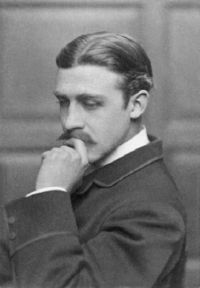
Portrait of Rennell Rodd Rennell Rodd Rose Leaf and Apple Leaf

He would judge of a picture by the amount of noble moral ideas it expresses; but to us the channels by which all noble work in painting can touch, and does touch, the soul are not those of truths of life or metaphysical truths. To him perfection of workmanship seems but the symbol of pride, and incompleteness of technical resource the image of an imagination too limitless to find within the limits of form its complete expression, or of a love too simple not to stammer in its tale. But to us the rule of art is not the rule of morals.
Source: Gutenberg

Portrait of Rennell Rodd Rennell Rodd Rose Leaf and Apple Leaf

Sincerity and constancy will the artist, indeed, have always; but sincerity in art is merely that plastic perfection of execution without which a poem or a painting, however noble its sentiment or human its origin, is but wasted and unreal work, and the constancy of the artist cannot be to any definite rule or system of living, but to that principle of beauty only through which the inconstant shadows of his life are in their most fleeting moment arrested and made permanent.
Source: Gutenberg

Portrait of Rennell Rodd Rennell Rodd Rose Leaf and Apple Leaf

Nor, in looking at a work of art, should we be dreaming of what it symbolises, but rather loving it for what it is. Indeed, the transcendental spirit is alien to the spirit of art. The metaphysical mind of Asia may create for itself the monstrous and many-breasted idol, but to the Greek, pure artist, that work is most instinct with spiritual life which conforms most closely to the perfect facts of physical life also. Nor, in its primary aspect, has a painting, for instance, any more spiritual message or meaning for us than a blue tile from the wall of Damascus, or a Hitzen vase.
Source: Gutenberg

Get perspective with Kwize: daily news enlightened by great literature