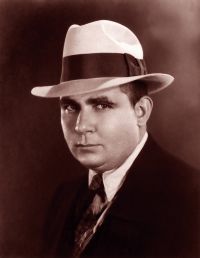
Robert Ervin Howard

Robert Ervin Howard

Summary

Portrait of Robert Ervin Howard Robert Ervin Howard The Hyborian Age (1936)

Thus in the speech of the gypsies lingered the terms Zingara and Zamora; the Æsir who dominated Nemedia were called Nemedians, and later figured in Irish history, and the Nordics who settled in Brythunia were known as Brythunians, Brythons or Britons.
There was no such thing, at that time, as a consolidated Nordic empire. As always, the tribes had each its own chief or king, and they fought savagely among themselves.
Source: Wikisource

Portrait of Robert Ervin Howard Robert Ervin Howard The Hyborian Age (1936)

Neither the squalid Picts nor the apish Atlanteans have any contact with other tribes or peoples.
Far to the east, the Lemurians, levelled almost to a bestial plane themselves by the brutishness of their slavery, have risen and destroyed their masters. They are savages stalking among the ruins of a strange civilization. The survivors of that civilization, who have escaped the fury of their slaves, have come westward. They fall upon that mysterious pre-human kingdom of the south and overthrow it, substituting their own culture, modified by contact with the older one.
Source: Wikisource

Portrait of Robert Ervin Howard Robert Ervin Howard The Hyborian Age (1936)

Imagination reconstructs the scene — the black-haired chief, in his tiger-skins and necklace of human teeth, squatting on the dirt floor of the wattle hut, listening intently to the eloquence of the priest, who probably sat on a carven, skin-covered block of mahogany provided in his honor — clad in the silken robes of a Nemedian priest, gesturing with his slender white hands as he expounded the eternal rights and justices which were the truths of Mitra.
Source: Wikisource

Get perspective with Kwize: daily news enlightened by great literature