Summary

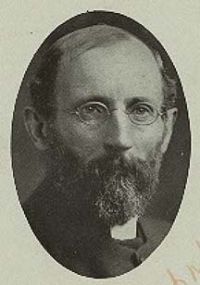
Portrait of Robert Henry Charles Robert Henry Charles The Apocrypha and Pseudepigrapha of the Old Testament (1913)

As we have already remarked, the Council of Trent adopted the Canon of the Council of Hippo and of Augustine, declaring: 'If any one receive not, as sacred and canonical, the said books entire with all their parts, as they have been used to be read in the Catholic Church, and as they are contained in the old Latin Vulgate . . . let him be anathema.' [8] All the Apocrypha except 1 Esdras, 4 Ezra, and the Prayer of Manasses belonging to the Apocrypha Proper were declared Canonical.
Source: Wikisource

Portrait of Robert Henry Charles Robert Henry Charles The Apocrypha and Pseudepigrapha of the Old Testament (1913)

Later Greek Fathers [5] rejected in various ways this conception of the Canon, but it was accepted and maintained in the West by St. Augustine. Where the Greek differed from the Hebrew Augustine held that the difference was due to Divine inspiration, and that this difference was to be regarded as a sign that in the passage in question an allegorical—not a literal—interpretation was to be looked for. Since he habitually used a Latin Bible, which embraced the Apocrypha, he appealed to the authority of these books as of the rest of the Scriptures.
Source: Wikisource

Portrait of Robert Henry Charles Robert Henry Charles The Apocrypha and Pseudepigrapha of the Old Testament (1913)

The Editor is also under deep obligations to the many scholars who, notwithstanding the pressure of other duties, have yet given themselves so unsparingly to the tasks they had undertaken, that in every instance most valuable service has been rendered to the student and the scholar, while in not a few instances their contributions form actual monographs within the limits assigned.
Source: Wikisource

Get perspective with Kwize: daily news enlightened by great literature