Summary

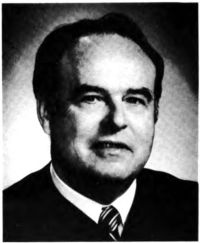
Portrait of Robert R. Beezer Robert R. Beezer Scott v. Ross — Opinion of the Court

Under the law, a corporation is a person. The defendant Cult Awareness Network is a corporation. It can only act through its employees, agents, directors or officers; therefore, a corporation is responsible for the acts of its employees, agents, directors and officers performed within the scope of their authority. An agent is a person who performs services for another person under an express agreement and who is subject to the other's control or right to control the manner and means of performing the services. The other person is called a principal.
Source: Wikisource

Portrait of Robert R. Beezer Robert R. Beezer Scott v. Ross — Opinion of the Court

In summary, there is sufficient evidence, if believed by the jury, to establish that Landa was a CAN contact person; that CAN functioned [p1283] through its contact people; that CAN members routinely referred people to deprogrammers, including Ross; that Ross conducted involuntary deprogrammings; and that CAN was aware of Ross and the fact he conducted involuntary deprogrammings. The evidence was sufficient to support the jury's verdict on the question of Landa's agency with respect to her referral of Tonkin to Ross.
Source: Wikisource

Portrait of Robert R. Beezer Robert R. Beezer Scott v. Ross — Opinion of the Court

The facts or data in the particular case upon which an expert bases an opinion or inference may be those perceived by or made known to the expert at or before the hearing. If of a type reasonably relied upon by experts in the particular field in forming opinions or inferences upon the subject, the facts or data need not be admissible in evidence.
Source: Wikisource

Get perspective with Kwize: daily news enlightened by great literature