Summary

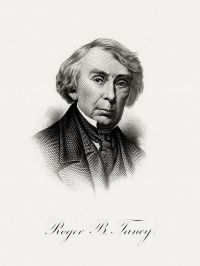
Portrait of Roger B. Taney Roger B. Taney Decatur v. Paulding — Opinion of the Court

To place a name on the pension list, to deliver his patent to a patentee, to record the commission of a justice of the peace, are acts not of a public concern, but solely affecting the interest of the individual. On these, as the Court say, it is 'their province to decide; not to inquire how the executive, or executive officers perform duties in which they have a discretion.' Is the plaintiff in error solely interested in the act which she requires the Secretary of the Navy to do? Does it affect her individual rights alone? Are not other claimants on the fund equally interested?
Source: Wikisource

Portrait of Roger B. Taney Roger B. Taney Decatur v. Paulding — Opinion of the Court

The entertaining such a cause is calculated to alarm all men who seriously think of the consequences. It is an invitation to all needy expectants, with pretensions of claim on the government, to seek this superior and controlling power, (the Circuit Court of this District,) and invoke its aid to force their hands into the treasury, contrary to the better judgment of the guardians of the public money. Thousands of claims exist, quite as fair on their face, and as simple in their details, as is this of Mrs. Decatur's, that have been rejected.
Source: Wikisource

Portrait of Roger B. Taney Roger B. Taney Decatur v. Paulding — Opinion of the Court

The process of reasoning adopted by those who maintain the power to assume jurisdiction, is, that where a right exists by law to demand money of an officer, and he refuses to pay, the Court can enforce the right by mandamus; and to ascertain the existence of the right, it is the duty of the Court to construe the law: and if by such construction, the right is found, and the refusal to pay ascertained to have been a mistake; then the officer will be coerced to pay out the money, as a ministerial duty.
Source: Wikisource

Get perspective with Kwize: daily news enlightened by great literature