Summary

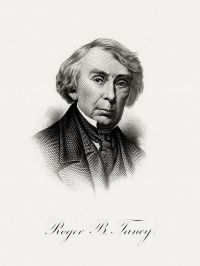
Portrait of Roger B. Taney Roger B. Taney Mitchell v. Harmony — Opinion of the Court

Private property cannot be taken for public use without compensation and against the consent of the owner. The officer who so takes it is subject to an action for its value. The duty of the government to compensate for property taken and applied to the public service is well established; but compensation cannot be given without legislative sanction; and no discretionary power existing in any executive officer (much less an inferior one acting without orders) to compel the citizen to furnish property or funds, or to suffer from its being taken, can be tolerated under our system of government.
Source: Wikisource

Portrait of Roger B. Taney Roger B. Taney Mitchell v. Harmony — Opinion of the Court

It is certainly true, as a general rule, that no citizen can lawfully trade with a public enemy; and if found to be engaged in such illicit traffic his goods are liable to seizure and confiscation. But the rule has no application to a case of this kind; nor can an officer of the United States seize the property of an American citizen, for an act which the constituted authorities, acting within the scope of their lawful powers, have authorized to be done.
Source: Wikisource

Portrait of Roger B. Taney Roger B. Taney Mitchell v. Harmony — Opinion of the Court

The actor against the citizen must be responsible until compensation be given. He may also be liable to an extent which the government may not sanction, by reason of his resorting to an unjustifiable course, or taking too much, or of a wrong kind, or wasting or using it. The indemnity which the government may or ought to afford him, is no defence to a suit. The defendant, therefore, is responsible to the plaintiff even if the supposed necessity had clearly existed, and the charge on this point is wholly in favor of the defendant, and not exceptionable.
Source: Wikisource

Get perspective with Kwize: daily news enlightened by great literature