Summary

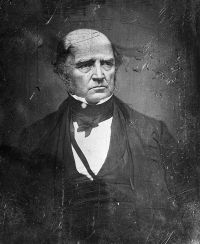
Portrait of Levi Woodbury Levi Woodbury Wilkes v. Dinsman — Opinion of the Court

The power itself, in its essential character, is a practical power of government. It is part and parcel of the executive power, as applicable to the navy, and belonging to its officers. Without its certain exercise, there could be no authority or discipline. It is impossible that the grounds of the order should be submitted to a jury before it be known whether it is to be obeyed. Nor can they be submitted to a jury upon evidence. It would not be practicable to prove them. No one knows what those grounds are, except the officer who makes the order.
Source: Wikisource

Portrait of Levi Woodbury Levi Woodbury Wilkes v. Dinsman — Opinion of the Court

On the second part of the instruction prayed, the court said: 'I think it is not a sufficient justification to find that the punishment was according to the rules and regulations of the navy. In the petty offences which by those rules are punishable by flogging, there is a limit within which the officer has a discretion, which should be exercised soundly and reasonably; and, in order to justify the officer, the jury must be satisfied that it was so exercised. In the case of such petit offences I think each punishment settles all previous offences of that kind.
Source: Wikisource

Portrait of Levi Woodbury Levi Woodbury Wilkes v. Dinsman — Opinion of the Court

Especially is it proper, not only that a public officer, situated like the defendant, be invested with a wide discretion, but be upheld in it, when honestly exercising, and not transcending, it as to discipline in such remote places, on such a long and dangerous cruise, among such savage islands and oceans, and with the safety of so many lives and the respectability and honor of his country's flag in charge.
Source: Wikisource

Get perspective with Kwize: daily news enlightened by great literature