Summary

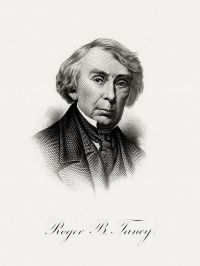
Portrait of Roger B. Taney Roger B. Taney Strader v. Graham (51 U.S. 82)…

It is a monstrosity in morals and in law, that a man who has been made free by the operation of law can make himself a slave. On the coming of the slave into the free state, by the mere force of the prohibition, his shackles fall from him. Are they ever to be restored? By what law? If he be free in Ohio and Indiana, how shall he be a slave elsewhere? What power of man is to redintegrate that condition? Nor is there any real distinction as to right of dominion and right of property. If the slave be made free, there can be no right of property in his service.
Source: Wikisource

Portrait of Roger B. Taney Roger B. Taney Strader v. Graham (51 U.S. 82)…

The fact that the slave was taken or permitted to reside, or hired, or sent to labor, where slavery was forbidden, determined the right to freedom.
The grand object and settled policy of the Ordinance would be evaded and defeated, if citizens of Ohio or Indiana could hire slaves in Virginia and Kentucky to cultivate their farms. If they could thus hire for a day, or a month, or a year, they could do so for any number of years. It would be no answer to say the master resided in a slave state, contracted in a slave state, and never intended to change the permanent residence of his slave.
Source: Wikisource

Get perspective with Kwize: daily news enlightened by great literature