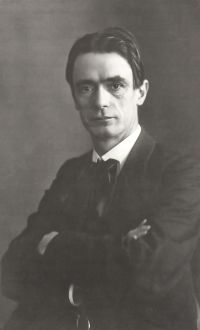
Rudolf Steiner

Rudolf Steiner

Summary

Portrait of Rudolf Steiner Rudolf Steiner Christianity As Mystical Fact… (1914)

It is true that every birth is accompanied by illness, that of the mother, but the illness leads to new life, not to death. In Lazarus that part of him becomes ill from which the "new man," permeated by the "Word," is born. *⁠*⁠* Where is the grave from which the "Word" is born? To answer this question we have only to remember Plato, who calls man's body the tomb of the soul. And we have only to recall Plato's speaking of a kind of resurrection when he alludes to the coming to life of the spiritual world in the body. What Plato calls the spiritual soul, St. John denominates the "Word."
Source: Wikisource

Portrait of Rudolf Steiner Rudolf Steiner Christianity As Mystical Fact… (1914)

What would there be remarkable about a person who has risen from the dead, if after his resurrection he were the same as he was before dying? Indeed what would be the meaning of describing the life of such a person in the words, "I am the resurrection and the life"? Life and meaning at once come into the words of Jesus if we understand them to be the expression of a spiritual occurrence and then, in a certain sense, literally as they stand in the text. Jesus actually says that He is the resurrection that has happened to Lazarus, and that He is the life that Lazarus is living.
Source: Wikisource

Get perspective with Kwize: daily news enlightened by great literature