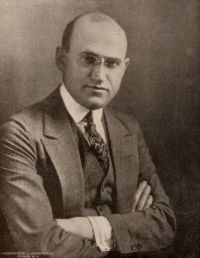
Samuel Goldwyn

Samuel Goldwyn

Summary

Portrait of Samuel Goldwyn Samuel Goldwyn Behind the Screen

To motion-pictures I owe all the wide range of contacts which have made up to me for a boyhood handicapped by so many unfavourable circumstances. To it I owe also the greatest blessing which can befall any one of us—an impersonal interest so vivid and compelling that it survives any personal grief or maladjustment.
261 Almost every one who has been connected with picture-production understands the fascination which it exerts. I always think, indeed, of the answer which Charlie Chaplin once made to somebody who asked him what he most wanted from the future.
Source: Gutenberg

Portrait of Samuel Goldwyn Samuel Goldwyn Behind the Screen

One time I asked Charlie who was his favourite screen actress. “I think Mary Pickford,” he answered unhesitatingly. “You see there’s a wonderful quality about her—it’s that more than her acting.”
Unlike almost every other screen actor, Charlie does not work from a script. When he starts a new story he is apt to come into his studio and say, “Build me a kitchen and a dining-room.” He has at this moment perhaps only the germ of an idea. But day by day he develops it, and as he does so his scenario-writer puts down each scene.
Source: Gutenberg

Portrait of Samuel Goldwyn Samuel Goldwyn Behind the Screen

In the light of this personal experience of Geraldine Farrar, that frequent question of hers “Who is to be my Don José” is invested with a strange, perverse, almost sinister, quality of destiny. It was not the Don José of her own life drama that she met in Lou Tellegen. It was the Toreador. When she came to California her heart, according to rumour, had not been untouched. But if this same rumour is to be credited further, it had never before been subjugated. Like the heroine of the drama and the opera with which she is so brilliantly identified, she had always retained her supremacy in love.
Source: Gutenberg

Get perspective with Kwize: daily news enlightened by great literature