Summary

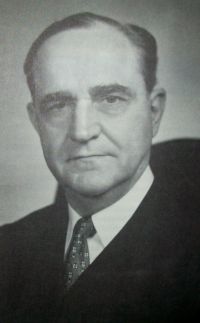
Portrait of Sherman Minton Sherman Minton Colgate-Palmolive-Peet Company v…

It is quite reasonable to suppose that Congress thought it conducive to stability of labor relations that parties be required to live up to a valid closed-shop contract made voluntarily with the recognized bargaining representative, regardless of internal disruptions growing out of agitation for a change in bargaining representative. In the instant case the employees exercised their right to choose their bargaining representative.
Source: Wikisource

Portrait of Sherman Minton Sherman Minton Colgate-Palmolive-Peet Company v…

Congress knew that a closed shop would interfere with freedom of employees to organize in another union and would, if used, lead inevitably to discrimination in tenure of employment. [15] Nevertheless, with full realization that there was a limitation by the proviso of § 8 (3) upon the freedom of § 7, Congress inserted the proviso of § 8 (3) . It is not necessary for us to justify the policy of Congress. It is enough that we find it in the statute. That policy cannot be defeated by the Board's policy, which would make an unfair labor practice out of that which is authorized by the Act.
Source: Wikisource

Portrait of Sherman Minton Sherman Minton Colgate-Palmolive-Peet Company v…

In the Rutland Court case the Board determined that an employer is not permitted to discharge employees pursuant to a closed-shop contract, even though the contract is valid under the proviso to § 8 (3) , when, to the employer's knowledge, the discharge is requested by the union for the purpose of eliminating employees who have sought to change bargaining representatives at a period when it is appropriate for the employees to seek a redetermination of representatives.
Source: Wikisource

Get perspective with Kwize: daily news enlightened by great literature