Summary

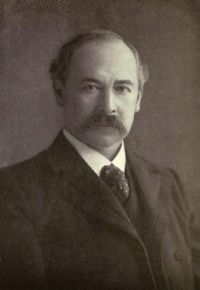
Portrait of Silvanus P. Thompson Silvanus P. Thompson William Gilbert, and Terrestial Magnetism in the Time of Queen Elizabeth

Gilbert piled proof upon proof, sometimes most cogently, as when he constructed loadstone globes, or terrellas to serve as magnetic models of the earth; sometimes with indifferent logic, as when he pointed to the iron ore in the earth and reasoned that the magnet tended to conform to (i.e. turn itself toward) the homogenic substance of the body from which it had been dug.
Source: Gutenberg

Portrait of Silvanus P. Thompson Silvanus P. Thompson William Gilbert, and Terrestial Magnetism in the Time of Queen Elizabeth

Gilbert's monumental work, the De Magnete, published in 1600, marks an era in magnetic science. For some four hundred years the employment of the magnetic needle in navigation had been known both in Northern and Southern Europe. While it is possible that the primitive use of the loadstone may be ascribed to the Baltic, it is certain that the employment of a pivotted needle, and the addition of a rose of the winds as a compass card both originated in the Mediterranean. The pivotted needle is described in the Epistle of Peter Peregrinus, written in 1269
Source: Gutenberg

Get perspective with Kwize: daily news enlightened by great literature