Summary

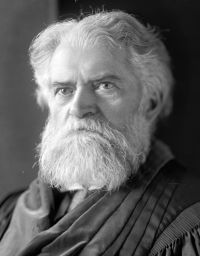
Portrait of Simon Newcomb Simon Newcomb Soap-bubbles of Socialism

In calling this a fallacy I wish not to be misunderstood. I am in favor of every movement which will really elevate the masses without pulling others down. I object to calling the labor movement philanthropic, for the simple reason that it is not philanthropic at all, but only intended to elevate those who take part in it at the expense of every one else. When its promoters organize a strike, they give not a moment’s consideration to the possible sufferings they may inflict on thousands of their fellow-men by the consequent scarcity of the necessaries of life.
Source: Wikisource

Portrait of Simon Newcomb Simon Newcomb Soap-bubbles of Socialism

First fallacy—That the inequality between the rich and the poor in the enjoyment of wealth is continually increasing.
Of course, it is not denied that the inequality in the ownership of wealth is as great as is commonly believed, and is increasing with every generation. What I maintain is that the benefits of this wealth are not so unequally divided as its ownership. To show the fallacy of confounding the two, let us first consider a miser who lives in a garret, sleeps on a mat, eats cold victuals, dresses in rags, and dies worth a million. Measured by the popular standard, he is a rich man.
Source: Wikisource

Portrait of Simon Newcomb Simon Newcomb Soap-bubbles of Socialism

The greatest objection to it is that it is founded on all the fallacies I have just tried to refute, and especially on one idea which underlies them all—namely, that there is in the country a great mass of wealth which, could the “toiling millions” only get at it, would enable them to live and enjoy themselves at their ease. I hold it the duty of every man who knows better than this to say so, and to do all he can toward showing his fellow-men that the notion is a mere illusion of the fancy.
Source: Wikisource

Get perspective with Kwize: daily news enlightened by great literature