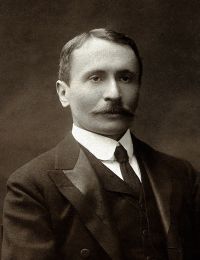
Sir Aurel Stein

Sir Aurel Stein

Summary

Portrait of Sir Aurel Stein Sir Aurel Stein The Thousand Buddhas (1921)

The Chinese genius is strong just where the Indian genius is weak. The bent of the Indian artist is to pour out his emotions and imaginings in a torrent, shaping them to form and colour as they come; he delights in exuberance and a fine excess; he cannot bear to leave a corner of his space unfilled. If we compare the Ajaṇṭā frescoes with the best of the Tun-huang paintings, say with that partly reproduced on Plate iii, we feel a different instinct at work. The Indian painters draw their figures and animals with an admirably expressive power and sense of life
Source: Gutenberg

Portrait of Sir Aurel Stein Sir Aurel Stein The Thousand Buddhas (1921)

But the ease and distinction of the drawing, which the simplicity of the figure and the scarcity of colour make all the more noticeable, betoken the Chinese artist’s brush. The slender-waisted body leans towards the left shoulder; the limbs are long and slim; the head erect. The face is young and clean-shaven with an expression of serenity in the downcast slightly oblique eyes and the finely curved lips. The hair rises in a high cone above the three-leaved tiara, the front of which shows Avalokiteśvara’s Dhyāni-buddha, Amitābha. The flesh is left uncoloured.
Source: Gutenberg

Portrait of Sir Aurel Stein Sir Aurel Stein The Thousand Buddhas (1921)

Apart from six figures of undetermined lesser Bodhisattvas, some of whom carry sacred vessels, the cortège of either comprises four youthful musicians playing on clappers, pipe, flute, and mouth-organ. In front of them marches a dark-coloured boy, undoubtedly meant for an Indian, carrying a bronze vessel, while another strides by the side of the chief Bodhisattva, leading his mount. The exaggerated dark colour of these Indians is, like the misdrawing of the elephant’s head and limbs, significant of the painter’s want of familiarity with things Indian.
Source: Gutenberg

Get perspective with Kwize: daily news enlightened by great literature