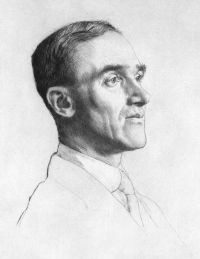
Sir J. W. Fortescue

Sir J. W. Fortescue

Summary

Portrait of Sir J. W. Fortescue Sir J. W. Fortescue British Campaigns in Flanders 1690-1794 (1918)

In no army was this policy of terror more ruthlessly pursued than in that of the Rhine, where unlimited powers were exercised by the representatives Lebas and St. Just, of whom the latter, a young man of twenty-six, gave himself the airs of omnipotent Jove, with a guillotine for thunderbolt. A campaign, however, cannot be won solely by decapitation of one’s own troops; and in the winter of 1793-1794 this fact began to impress itself, in respect not only of the army but of France at large, upon some of the ruling men in Paris.
Source: Gutenberg

Portrait of Sir J. W. Fortescue Sir J. W. Fortescue British Campaigns in Flanders 1690-1794 (1918)

In another quarter the Royal Scots and the Seventh Fusiliers gained not less brilliant success; and in fact it was the most creditable action that William had fought during the whole war. It cost the Allies two thousand men killed and wounded, the three battalions of Guards alone losing thirty-two officers. The British were to fight many such bloody combats during the next twenty years—combats forgotten since they were merely incidents in the history of a siege, and so frequent that they were hardly chronicled, and are not to be restored to memory now.
Source: Gutenberg

Portrait of Sir J. W. Fortescue Sir J. W. Fortescue British Campaigns in Flanders 1690-1794 (1918)

The British, though they had not reaped great victories, had made their presence felt, and terribly felt, on the battlefield; and, as the French in the Peninsula remembered that the British had fought them with a tenacity which they had not found in other nations, not only in Egypt, but even earlier at Tournay and Linselles, so, too, after Blenheim and Ramillies they looked back to the furious attack at Steenkirk and the indomitable defence of Neerwinden.
Source: Gutenberg

Get perspective with Kwize: daily news enlightened by great literature