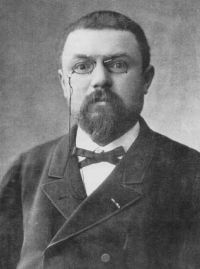
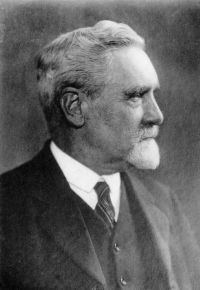
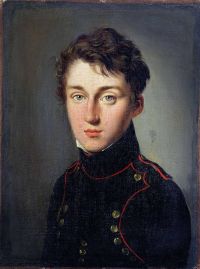
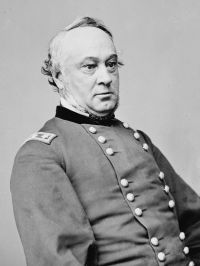
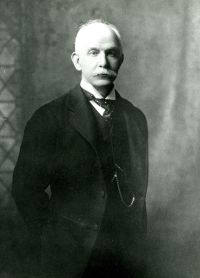
Claude-Léopold-Marius Carnot

Definition and stakes

1911 Encyclopædia Britannica (1911)

Hippolyte Carnot lived at first in exile with his father, returning to France only in 1823. Unable then to enter active political life, he turned to literature and philosophy, publishing in 1828 a collection of Chants helléniques translated from the German of W. Müller, and in 1830 an Exposé de la doctrine Saint-Simonienne, and collaborating in the Saint-Simonian journal Le Producteur.
Source: Wikisource

Various Encyclopaedia Britannica, 11th Edition…

The Revolution drew him into political life, and he was elected a deputy for the Pas de Calais. In the Assembly he 377 took a prominent part in debates connected with the army. Carnot was a stern and sincere republican, and voted for the execution of the king. In the campaigns of 1792 and 1793 he was continually employed as a commissioner in military matters, his greatest service being in April 1793 on the north-eastern frontier, where the disastrous battle of Neerwinden and the subsequent defection of Dumouriez had thrown everything into confusion.
Source: Gutenberg

Various Encyclopaedia Britannica, 11th Edition…

When Carnot’s arrest was demanded in May 1795, a deputy cried “Will you dare to lay hands on the man who has organized victory?” Carnot had just accepted promotion to the rank of major in the engineers. Throughout 1793, when he had been the soul of the national defence, and 1794, in which year he had “organized victory” in fourteen armies, he was a simple captain.
Carnot was elected one of the five Directors in November 1795, and continued to direct the war department during the campaign of 1796.
Source: Gutenberg

Get perspective with Kwize: daily news enlightened by great literature