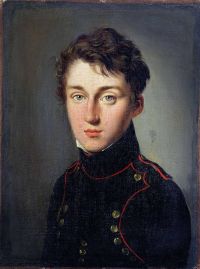
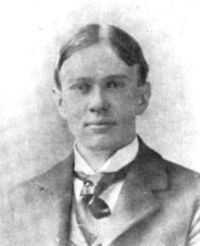
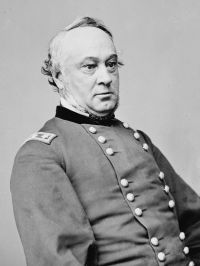
Claude-Louis-Henri de Carnot

Definition and stakes

Louis Antoine Fauvelet de Bourrienne,  Memoirs of Napoleon Bonaparte…

“ There were special reasons for the appointment of Carnot, Berthier was required with his master in Italy, while Carnot, who had so long ruled the armies of the Republic, was better fitted to influence Moreau, at this time advancing into Germany. Carnot probably fulfilled the main object of his appointment when he was sent to Moreau, and succeeded in getting that general, with natural reluctance, to damage his own campaign by detaching a large body of troops into Italy. ”
Source: Gutenberg

1911 Encyclopædia Britannica (1911)

“ Hippolyte Carnot lived at first in exile with his father, returning to France only in 1823. Unable then to enter active political life, he turned to literature and philosophy, publishing in 1828 a collection of Chants helléniques translated from the German of W. Müller, and in 1830 an Exposé de la doctrine Saint-Simonienne, and collaborating in the Saint-Simonian journal Le Producteur. ”
Source: Wikisource

Portrait of Hippolyte Taine Hippolyte Taine,  The French Revolution - Volume 2

“ I. 139: "It was then that the 'Mountain' used all the means of intimidation it knew so well how to bring into play, filling the galleries with its satellites, who shouted out to each other the name of each deputy as he stepped up to the president's table to give his vote, and yelling savagely at every one who did not vote for immediate and unconditional death.—Carnot, "Mémoires," I.293. Carnot voted for the death of the king; yet afterward he avowed that "Louis XVI. would have been saved, if the Convention had not held its deliberations under the dagger." ”
Source: Gutenberg

Get perspective with Kwize: daily news enlightened by great literature