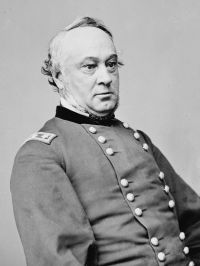
Charles Francis Atkinson

Biographical details

Charles Francis Atkinson 1911 Encyclopædia Britannica (1911)

Rupert and the Royalist horse again and again charged up to the squares of pikes, and between each charge his guns tried to disorder the Londoners, but it was not until the advance of the royal infantry that the trained bands retired, slowly and in magnificent order, to the edge of the heath. The result of it all was that Essex’s army had fought its hardest and failed to break the opposing line. But the Royalists had suffered so heavily, and above all the valour displayed by the rebels had so profoundly impressed them, that they were glad to give up the disputed road and withdraw into Newbury.
Source: Wikisource

Charles Francis Atkinson 1911 Encyclopedia Britannica (1911)

The handy formation of maniples at open order was unique in the ancient world, and it did not reappear in history up to the advent of Gustavus Adolphus. In this formation, in which everything was entrusted to the skill of subordinates and the individual courage of the rank and file, the Romans met and withstood with success every type of impact, from the ponderous shock of the Macedonian phalanx and the dangerous rush of Celtic savages to the charge of elephants. Yet it was no particular virtue in the actual form employed that carried the Roman arms to so many victories.
Source: Wikisource

Charles Francis Atkinson 1911 Encyclopedia Britannica (1911)

The civilian became eager to be trained to fight against the oppressor of his country; and when Prussia rose in 1813, the armies she poured into the field were no longer professional, but national armies, imperfectly trained and organized, but animated by a spirit which more than compensated for these defects. At the close of the war her rulers, with far-seeing sagacity, at once devoted themselves to organize on a permanent footing the system which had sprung up under the necessities and enthusiasm of the moment.
Source: Wikisource

Get perspective with Kwize: daily news enlightened by great literature