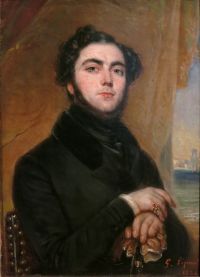
Eugène de Beauharnais

Definition and stakes

Various,  Court Memoirs of France Series…

“ Eugene de Beauharnais never was a great favourite with Joseph Bonaparte, whose reserved manners and prudence form too great a contrast to his noisy and blundering way to accord with each other. Before he set out for Italy, it was well known in our fashionable circles that he had been interdicted the house of his uncle, and that no reconciliation took place, notwithstanding the endeavours of Madame Napoleon. To humble him still more, Joseph even nominated la Fond-Blaniac an equerry to his wife, who, therefore, easily consoled herself for the departure of her dear nephew. ”
Source: Gutenberg

Various,  Court Memoirs of France Series…

“ He trusted so much to the promises of Bonaparte and Talleyrand, that he believed himself destined to reign for life, and was, therefore, not a little surprised when he was ordered by Napoleon the First to descend and salute Eugene de Beauharnais as the deputy Sovereign of the Sovereign King of Italy. He was not philosopher enough to conceal his chagrin, and bowed with such a bad grace to the new Viceroy that it was visible he would have preferred seeing in that situation an Austrian Archduke as a governor-general. ”
Source: Gutenberg

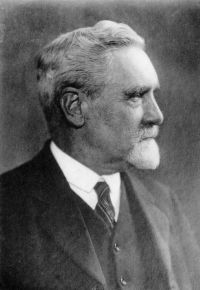
Portrait of John Holland Rose John Holland Rose,  1911 Encyclopædia Britannica (1910)

“ BEAUHARNAIS, EUGÈNE DE (1781–1824) , step-son of Napoleon I., was born at Paris on the 3rd of September 1781. He was the son of the general Viscount Alexandre de Beauharnais (1760–1794) and Josephine Tascher de la Pagerie. The father, who was born in Martinique, and served in the American War of Independence, took part in the politics of the French Revolution, and in June-August 1793 commanded the army of the Rhine. ”
Source: Wikisource

Get perspective with Kwize: daily news enlightened by great literature