Summary

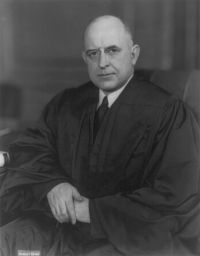
Portrait of Stanley Forman Reed Stanley Forman Reed Mazer v. Stein — Opinion of the Court

But may statuettes be granted the monopoly of the copyright?
Article I, § 8 of the Constitution grants Congress the power 'To promote the Progress of Science and useful Arts, by securing for limited Times to Authors * * * the exclusive Right to their respective Writings * * *.' The power is thus circumscribed: it allows a monopoly to be granted only to 'authors' for their 'writings.' Is a sculptor an 'author' and is his statute a 'writing' within the meaning of the Constitution? We have never decided the question.
Source: Wikisource

Portrait of Stanley Forman Reed Stanley Forman Reed Mazer v. Stein — Opinion of the Court

We do hold that the patentability of the statuettes, fitted as lamps or unfitted, does not bar copyright as works of art. Neither the Copyright Statute nor any other says that because a thing is patentable it may not be copyrighted. We should not so hold. [38]
Unlike a patent, a copyright gives no exclusive right to the art disclosed; protection is given only to the expression of the idea-not the idea itself.
Source: Wikisource

Portrait of Stanley Forman Reed Stanley Forman Reed Mazer v. Stein — Opinion of the Court

The dichotomy of protection for the aesthetic is not beauty and utility but art for the copyright and the invention of original and ornamental design for design patents. We find nothing in the copyright statute to support the argument that the intended use or use in industry of an article eligible for copyright bars or invalidates its registration.
Source: Wikisource

Get perspective with Kwize: daily news enlightened by great literature