Summary

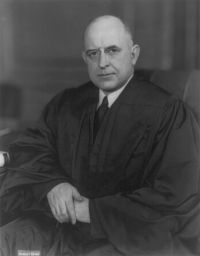
Portrait of Stanley Forman Reed Stanley Forman Reed United Brotherhood of Carpenters and Joiners of America v…

A basis for liability which has entered into the warp and woof of our law, as is true of the responsibility of collective bodies for the acts of their agents, should not be deemed to have been uprooted by an enactment which merely emphasizes that basis and rules out its distortions. 1932 was too late in the day for Congress not to have known that unions, like other organizations, act only through officers, and that unions do not, any more than do other organizations, explicitly instruct their officers to violate the Sherman Law.
Source: Wikisource

Portrait of Stanley Forman Reed Stanley Forman Reed United Brotherhood of Carpenters and Joiners of America v…

The abuse was misapplication of the law of agency so that labor unions were held responsible for the conduct of individuals in whom was lodged no authority to wield the power of the union. By undue extension of the doctrine of conspiracy, whereby the act of each conspirator is chargeable to all, unions were on occasion held responsible for isolated acts of individuals, believed in some instances to have been agents provocateurs who held a spurious membership in the union during a strike. Congress merely aimed to curb such an abusive misapplication of the principle of agency.
Source: Wikisource

Get perspective with Kwize: daily news enlightened by great literature