Summary

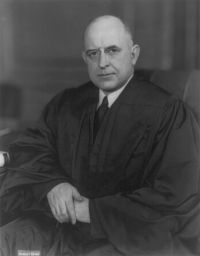
Portrait of Stanley Forman Reed Stanley Forman Reed United Public Workers of America v…

For regulation of employees it is not necessary that the act regulated be anything more than an act reasonably deemed by Congress to interfere with the efficiency of the public service. There are hundreds of thousands of United States employees with positions no more influential upon policy determination than that of Mr. Poole. Evidently what Congress feared was the cumulative effect on employee morale of political activity by all employees who could be induced to participate actively.
Source: Wikisource

Portrait of Stanley Forman Reed Stanley Forman Reed United Public Workers of America v…

Whatever differences there may be between administrative employees of the Government and industrial workers in its employ are differences in detail so far as the constitutional power under review is concerned. Whether there are such differences and what weight to attach to them, are all matters of detail for Congress. We do not know whether the number of federal employees will expand or contract; whether the need for regulation of their political activities will increase or diminish. The use of the constitutional power of regulation is for Congress, not for the courts.
Source: Wikisource

Portrait of Stanley Forman Reed Stanley Forman Reed United Public Workers of America v…

Another Congress may determine that on the whole, limitations on active political management by federal personnel are unwise. The teaching of experience has evidently led Congress to enact the Hatch Act provisions. The declare that the present supposed evils of political activity are beyond the power of Congress to redress would leave the nation impotent to deal with what many sincere men believe is a material threat to the democratic system. Congress is not politically naive or regardless of public welfare or that of the employees.
Source: Wikisource

Get perspective with Kwize: daily news enlightened by great literature