Summary

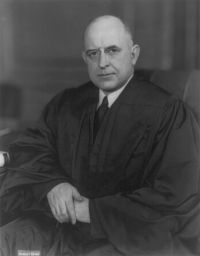
Portrait of Stanley Forman Reed Stanley Forman Reed United States v. E. I. Du Pont De Nemours and Company…

Patents, on the other hand, furnish the most familiar type of classic monopoly. As the producers of a standardized product bring about significant differentiations of quality, designed, or packaging in the product that permit differences of use, competition becomes to a greater or less degree incomplete and the producer's power over price and competition greater over his article and its use, according to the differentiation he is able to create and maintain.
Source: Wikisource

Portrait of Stanley Forman Reed Stanley Forman Reed United States v. E. I. Du Pont De Nemours and Company…

Thus one can theorize that we have monopolistic competition in every nonstandardized commodity with each manufacturer having power over the price and production of his own product. [20] However, this power that, let us say, automobile or soft-drink manufactures have over their trademarked products is not the power that makes an illegal monopoly. Illegal power must be appraised in terms of the competitive market for the product.
Source: Wikisource

Portrait of Stanley Forman Reed Stanley Forman Reed United States v. E. I. Du Pont De Nemours and Company…

Determination of the competitive market for commodities depends on how different from one another are the offered commodities in character or use, how far buyers will go to substitute one commodity for another. For example, one can think of building materials as in commodity competition but one could hardly say that brick competed with steel or wood or cement or stone in the meaning of Sherman Act litigation; the products are too different. This is the interindustry competition emphasized by some economists.
Source: Wikisource

Get perspective with Kwize: daily news enlightened by great literature