Summary

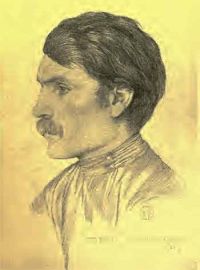
Portrait of Stephen Graham Stephen Graham Tramping With a Poet in the Rockies (1922)

Then we lay flat on our backs on our blankets and watched our sparks fly up and die in scores, in thirties, in fives, in thirty-fives, in hundred and fives. What a giddy and wild life some of them had! How they whirled! How impetuous were some, how serpentine others! We saw how all of them trailed their light as the first escaped from the fire, and were like serpents of flame.
“They do not die,” said the poet. “They only seem to die; they go on, like ideas, into the invisible world. I’d like to write a volume of adventures, the story of the adventures of, say, twelve different sparks.”
Source: Gutenberg

Portrait of Stephen Graham Stephen Graham Tramping With a Poet in the Rockies (1922)

I find a belief in the wilderness strong in Vachel Lindsay. He holds that the wild West has been and still must be the spiritual lodestone of American men. Untamed America has remade the race. Andrew Jackson was the voice of the West of his day, Abraham Lincoln of his. And though New England has held the hegemony of letters he divines that the wilderness—the mountains—will be the source of the inspiration of the coming time. Early America derived most of her inspiration from across the Atlantic.
Source: Gutenberg

Portrait of Stephen Graham Stephen Graham Tramping With a Poet in the Rockies (1922)

The sun went down, the shadows below us deepened, the snow banks multiplied themselves in number, and their outlines and suggestiveness intensified as the valley whence we had arisen lost its trees and changed to a vast blank abyss. Our unfailing wonder when we sat down on a stone to regain our lost breath was the multitudinous terrain of awful, wrathful mountain peaks which in indescribable promiscuity had climbed the horizon wall to stare at us.
Source: Gutenberg

Get perspective with Kwize: daily news enlightened by great literature