Summary

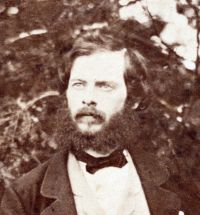
Portrait of Theodore Winthrop Theodore Winthrop John Brent — Chapter XXV. Noblesse Oblige

I knew how, long ago in childhood, he had made Nature friend, and found his earliest comrades among flowers and birds. I knew, for he had been my teacher, how, when youth first looked widely forth for visions of the Infinite, he had learned to comprehend, day after day, night after night, the large delight of heaven; whether the busy heaven, when the golden sun makes our sky blue above us, and reveals on earth the facts that we must deal with and by which we must be taught our laws, or the quiet heaven of night, with its starry tokens of grander fruition, when we shall live for grander days.
Source: Wikisource

Portrait of Theodore Winthrop Theodore Winthrop John Brent — Chapter XXV. Noblesse Oblige

And so, when his time came to perceive the higher significance of Art, as man’s rudimentary efforts toward creations diviner and more orderly than those of earth, he had gone to Art with the unerring eye and interpreting love of a fresh soul, schooled by Nature only, blind to Art’s baser fancies, and hospitable to its holier dreams. No ugly visions could visit the uncontrolled hours of a brain so stored.
Source: Wikisource

Portrait of Theodore Winthrop Theodore Winthrop John Brent — Chapter XXV. Noblesse Oblige

Body, brain, heart, all had had exhausting taxes to pay. The realm must rest.
While his mind slept, Nature was gently renewing him. Quiet is cure to an untainted life. There was no old fever of discontent in his brain. He had regrets, but no remorses. Others had harmed him; his life had been a sad one; he had never harmed himself. The thoughts and images tangled in his brain, the “stuff that dreams are made of,” were of happy omen. No Stygian fancies made his trance unrest. Life did not struggle for recovery that it might plunge again into base or foul pursuits, or the scuffles of selfishness.
Source: Wikisource

Get perspective with Kwize: daily news enlightened by great literature