Summary

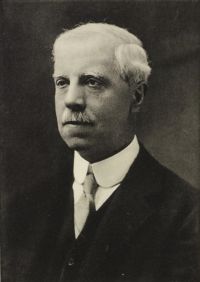
Portrait of Thomas Little Heath Thomas Little Heath 1911 Encyclopædia Britannica, Volume 20… (1911)

PAPPUS OF ALEXANDRIA, Greek geometer, flourished about the end of the 3rd century A.D. In a period of general stagnation in mathematical studies, he stands out as a remarkable exception. How far he was above his contemporaries, how little appreciated or understood by them, is shown by the absence of references to him in other Greek writers, and by the fact that his work had no effect in arresting the decay of mathematical science. In this respect the fate of Pappus strikingly resembles that of Diophantus.
Source: Wikisource

Portrait of Thomas Little Heath Thomas Little Heath 1911 Encyclopædia Britannica, Volume 20… (1911)

Pappus gives several solutions of this problem, including a method of making successive approximations to the solution, the significance of which he apparently failed to appreciate; he adds his own solution of the more general problem of finding geometrically the side of a cube whose content is in any given ratio to that of a given one. (2) On the arithmetic, geometric and harmonic means between two straight lines, and the problem of representing all three in one and the same geometrical figure.
Source: Wikisource

Portrait of Thomas Little Heath Thomas Little Heath 1911 Encyclopædia Britannica, Volume 20… (1911)

With the mention of the Porisms of Euclid we have an account of the relation of porism to theorem and problem. In the same preface is included (a) the famous problem known by Pappus’s name, often enunciated thus: Having given a number of straight lines, to find the geometric locus of a point such that the lengths of the perpendiculars upon, or {more generally) the lines drawn from it obliquely at given inclinations to, the given lines satisfy the condition that the product of certain of them may bear a constant ratio to the product of the remaining ones
Source: Wikisource

Get perspective with Kwize: daily news enlightened by great literature