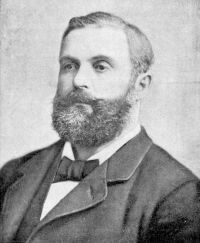
Thomas Wallace Knox

Thomas Wallace Knox

Summary

Portrait of Thomas Wallace Knox Thomas Wallace Knox Captain John Crane, 1800-1815

It always wants to speak to any vessel that comes within hailing distance, and always wants to send letters by her; but every ship that takes letters from her is sure to be lost."
"Well, then, if I was captain of a ship," said I, "and met the Flying Dutchman, I wouldn't take any of his letters for him."
"No more would I," said Haines; "but, what's more, when you see the Phantom Ship, even though you don't speak her or take letters from her, you are liable to have white squalls and hurricanes, waterspouts and tornadoes. He has a crew that are just as bad scoundrels as himself.
Source: Gutenberg

Portrait of Thomas Wallace Knox Thomas Wallace Knox Captain John Crane, 1800-1815

I retorted, "whether your vessel is a prize to a seventy-four-gun man-of-war, or a privateer like this? You lose it in either case, and that's all there is about it. Armies are formed of, and navies are manned by, individuals; and what difference does it make as to their way of fighting, as long as they fight? Peace is brought about by the distress of the people of the nations at war, and a nation is made up of individuals, no matter whether it be a republic or a kingdom.
Source: Gutenberg

Portrait of Thomas Wallace Knox Thomas Wallace Knox Captain John Crane, 1800-1815

Haines answered. "You don't know how the British ships-of-war have been treating American merchantmen ever since the Revolution."
"How is that?" I asked.
"Well, they treat us very much as if we had no rights whatever," was the reply. "Great Britain claims that when a man is once a subject of that country he is always a subject, and if the government wants him for any purpose it has a right to take him wherever he can be found."
"Oh, I see," said I; "if there are any Englishmen on board the Washington, and a British man-of-war wants them, her captain has a right to take them."
Source: Gutenberg

Get perspective with Kwize: daily news enlightened by great literature