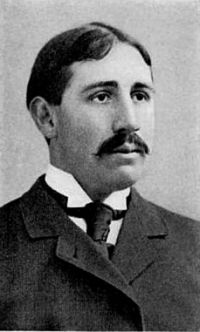
Ralph Delahaye Paine

Ralph Delahaye Paine

Summary

Portrait of Ralph Delahaye Paine Ralph Delahaye Paine The ships and sailors of old Salem (1912)

The East India Marine Society still exists. The handful of surviving members meet now and then and spin yarns of the vanished days when they were masters of stately square-riggers in the deep-water trade. All of them are gray and some of them quite feeble and every little while another of this company slips his cable for the last long voyage.
The sight-seeing visitor in Salem is fascinated by its quaint and picturesque streets, recalling as they do no fewer than three centuries of American life, and by its noble mansions set beneath the elms in an atmosphere of immemorial traditions.
Source: Gutenberg

Portrait of Ralph Delahaye Paine Ralph Delahaye Paine The ships and sailors of old Salem (1912)

Rigged as a three-masted ship, with an unusual spread of canvas, the Essex must have been a rarely beautiful marine picture when under way. The handling of such a majestic fabric as one of these old-time men-of-war is mirrored in the song of “The Fancy Frigate” which describes how such a ship as this noble Essex was manned by the hundreds of tars who swarmed among her widespread yards:
“Now my brave boys comes the best of the fun,
All hands to make sail, going large is the song.
From under two reefs in our topsails we lie,
Like a cloud in the air, in an instant must fly.
Source: Gutenberg

Portrait of Ralph Delahaye Paine Ralph Delahaye Paine The ships and sailors of old Salem (1912)

The twentieth century has forgotten the era when Yankee topsails, like flying clouds, flecked every ocean, when tall spars forested every Atlantic port from Portland to Charleston, and when the American spirit of adventurous enterprise and rivalry was in its finest flower on the decks of our merchant squadrons. The last great chapter of the nation’s life on blue water was written in the days of the matchless clippers which swept round the Horn to San Francisco or fled homeward from the Orient in the van of the tea fleets.
Source: Gutenberg

Get perspective with Kwize: daily news enlightened by great literature