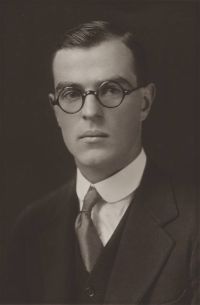
Thornton Niven Wilder

Thornton Niven Wilder

Summary

Portrait of Thornton Niven Wilder Thornton Niven Wilder The Bridge of San Luis Rey (1927)

Madre María del Pilar had come to hate all men, but she grew fond of Manuel and Esteban. In the late afternoon she would call them into her office, send for some cakes from the kitchen, and tell them stories about the Cid and Judas Maccabeus and the thirty-six misfortunes of Harlequin. She grew to love them so, that she would catch herself gazing deep into their black and frowning eyes, looking for those traits that would appear when they grew to be men, all that ugliness, all that soullessness that made hideous the world she worked in.
Source: Wikisource

Portrait of Thornton Niven Wilder Thornton Niven Wilder The Bridge of San Luis Rey (1927)

Camila alone remembers her Uncle Pio and her son; this woman, her mother. But soon we shall die and all memory of those five will have left the earth, and we ourselves shall be loved for a while and forgotten. But the love will have been enough; all those impulses of love return to the love that made them. Even memory is not necessary for love. There is a land of the living and a land of the dead and the bridge is love, the only survival, the only meaning.
Source: Wikisource

Portrait of Thornton Niven Wilder Thornton Niven Wilder The Bridge of San Luis Rey (1927)

But Uncle Pio’s glance had been upon her all night, a quick glance from his black eyes, full of tenderness and anxiety, resting on the great secret and reason of his life.
But Uncle Pio never ceased watching Camila. He divided the inhabitants of this world into two groups, into those who had loved and those who had not. It was a horrible aristocracy, apparently, for those who had no capacity for love (or rather for suffering in love) could not be said to be alive and certainly would not live again after their death.
Source: Wikisource

Get perspective with Kwize: daily news enlightened by great literature