Summary

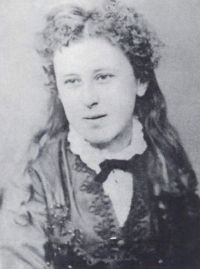
Portrait of Vernon Lee Vernon Lee Penelope Brandling: A Tale of the Welsh coast in the Eighteenth Century

How could I say 'Go! because your life may any day be forfeited like mine, and go alone! because—well—because I am a hostage, a man condemned to death if he stir, a prisoner as much as if I were chained to the walls of this house.' Had I said that, you would have refused to go, Penelope. But now, my dear...." And you bent down and kissed me very mournfully.
"But now, Eustace," I answered, and I heard that my voice was solemn, "but now I can stay with you, because I know as much as you do, and they will soon know that I do so, even if they do not know yet.
Source: Gutenberg

Portrait of Vernon Lee Vernon Lee Penelope Brandling: A Tale of the Welsh coast in the Eighteenth Century

We can live, because we have to die—together."
Eustace, you folded me in your arms and I felt you sob. But I loosened your hands and kissed them one by one, and said, "Nay, Eustace, why should you grieve? Do we not love each other? Are we not together, quite together, and together for always?"
We are standing by the big window in my room, and as we clasped one another, our eyes, following each other's, rested on the sea above the tree tops. It was a silvery band under a misty silver sunset; very sweet and solemn. Our souls, methought, were sailing in its endless peacefulness.
Source: Gutenberg

Portrait of Vernon Lee Vernon Lee Penelope Brandling: A Tale of the Welsh coast in the Eighteenth Century

Eustace has gone below to his uncles; and I am alone in this great room, and also, I imagine, in the whole wing of this great house. The wax lights on the dressing-table, and the unsnuffed dip with which the old housekeeper lit us through endless passages, leave all the corners dark. But the moonlight pours in through the vast, cage-like window. The moon is shining on a strip of sea above the tree-tops, and the noise of the sea is quite close; a noise quite unlike that of any running water, and methinks very melancholy and hopeless in expression.
Source: Gutenberg

Get perspective with Kwize: daily news enlightened by great literature