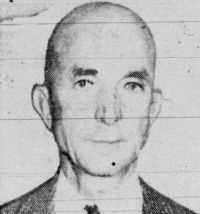
W. C. Tuttle

W. C. Tuttle

Summary

Portrait of W. C. Tuttle W. C. Tuttle The ranch of the tombstones (1922)

Blondy was not afraid of Spot—not in the least, but he knew that Spot would have something to say about what happened in the War-Bonnet.
Blondy was one of those peculiar characters whose gun was always ready for hire, and he could still feel the weight of Spot Easton’s cash. He really wanted to see Spot and, if possible, get more money; but he felt that he really should do something to earn what he had already been paid.
He weaved out of the Ten-Spot saloon and balanced himself against a porch-post. Just to his left was a hitch-rack, partly lighted from the Ten-Spot window.
Source: Gutenberg

Portrait of W. C. Tuttle W. C. Tuttle The ranch of the tombstones (1922)

Blackwood swung into his saddle, looked at Hashknife for several moments as though wanting to say something, but was unable to begin. Then as he turned slowly and rode out of the yard, unbelieving that any man or men could be so generous.
The cattlemen roped Easton to a horse, picked up Doc Clevis and Jake Blue, and strung out in a long cavalcade toward town.
Source: Gutenberg

Portrait of W. C. Tuttle W. C. Tuttle The ranch of the tombstones (1922)

Hashknife and Sleepy rode across to a hitch-rack, tied their horses, and went into the War-Bonnet.
The War-Bonnet was a large place for a town the size of Caldwell, but it looked prosperous. There was not much activity during the day, so the place was nearly deserted when Hashknife and Sleepy came in.
A couple of girls were on the small stage-like platform at the end of the room, practising a few dance steps, while with one hand a pallid young man thumped out a melody on the piano.
A bartender humped his white-clad elbows on the bar, while he deeply perused a paper-backed novel.
Source: Gutenberg

Get perspective with Kwize: daily news enlightened by great literature