Hashknife

Definition and stakes

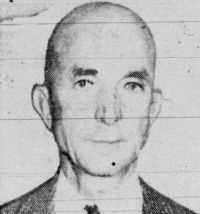
Portrait of W. C. Tuttle W. C. Tuttle,  The Buckaroo of Blue Wells — X. Hashknife and Sleepy… (1926)

“ He quieted the horse, spat explosively and shut one eye as he looked down at Hashknife.
“Well?” he said rather defiantly.
“Not so well,” said Hashknife coldly.
He circled the horse, but there was no rifle in sight.
“What’s the idea?” queried the man.
“That’s what I want to know. Who are you, pardner?”
“M’ name’s 'Goode. G-o-o-d-e. Called ‘Plenty.’”
“Yeah? Good rifle shot?”
“Fair.”
“Uh-huh,” Hashknife considered Mt. Goode. He was not a soft-looking person.
”
Source: Wikisource

Portrait of W. C. Tuttle W. C. Tuttle,  The Dead-Line (1924)

“ Hashknife did not leave his position. Some one yelled a question from the bunk house, and Hashknife saw Slim De Larimore, Curt, Steil and Allison running from the bunk house to the group around King.
Hashknife jerked back and began rolling a cigaret, while his eyebrows drew together in a frown of concentration. He lighted the cigaret and peeked out again. The crowd was still standing around the prostrate figure of King, and Hashknife could hear them arguing over what had happened. Sunshine was talking loud enough to have been heard a quarter of a mile away.
”
Source: Gutenberg

Portrait of W. C. Tuttle W. C. Tuttle,  Thicker than water (1927)

“ Hashknife had never studied psychology, nor had he ever tried to analyze crime. Born of poor parents—his father had been an itinerant minister in the Milk River country, in Montana—he had had little schooling. At an early age he had started out to make his own way in the world, working as a cowboy, the only profession he knew.
But he had a receptive mind, and in the years that followed he had picked up a varied education, absorbing the things that are often overlooked by other men, more fortunate in their earlier years; studying human nature, but always analyzing things.
”
Source: Gutenberg

Get perspective with Kwize: daily news enlightened by great literature