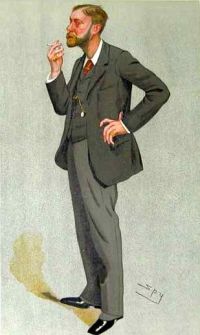
Walter Herries Pollock

Walter Herries Pollock

Summary

Portrait of Walter Herries Pollock Walter Herries Pollock Encyclopædia Britannica, Ninth Edition (1888)

Barry Lyndon has, with a very great difference in treatment, some resemblance to Smollett's Count Fathom;—the hero, that is to say, is or becomes a most intolerable scoundrel, who is magnificently unconscious of his own iniquity. The age and pressure of the time depicted are caught with amazing verisimilitude, and in the boyish career of Barry Lyndon there are fine touches of a wild chivalry, simplicity, and generosity, which mingle naturally with the worse qualities that, under the influence of abominable training, afterwards corrupt his whole mind and career.
Source: Wikisource

Portrait of Walter Herries Pollock Walter Herries Pollock Encyclopædia Britannica, Ninth Edition (1888)

In 1857 Thackeray stood unsuccessfully as a parliamentary candidate for Oxford against Mr Cardwell, and in the same year appeared the first number of The Virginians, a sequel to Esmond. This is a most unequal work, inferior, as sequels are apt to be, to Esmond as an historical romance, less compact and coherent, prone to divagation and desultoriness, yet charming enough in its lifelikeness, in the wit and wisdom of its reflexions, and, as has been said, in its portrait of Beatrix grown old.
Source: Wikisource

Portrait of Walter Herries Pollock Walter Herries Pollock Encyclopædia Britannica, Ninth Edition (1888)

Here, as in Vanity Fair, the heroism has been found a little insipid; and there may be good ground for finding Laura Pendennis dull, though she has a spirit of her own. In later books she becomes, what Thackeray's people very seldom are, a tiresome as well as an uninviting person. Costigan is unique, and so is Major Pendennis, a type which, allowing for differences of period and manners, will exist as long as society does, and which has been seized and depicted by Thackeray as by no other novelist.
Source: Wikisource

Get perspective with Kwize: daily news enlightened by great literature