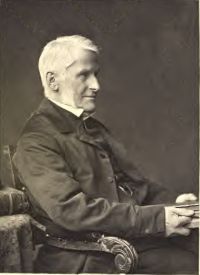
“ Never have I found that door or entered that room again, but by-and-by I know that I shall find them both once more, and shall then and there read the answer that forever stands written in that book, for it still lies open at the very page, and he upon whose knees it rests is Israfeel, the Angel of Death.But what of the sequel? Is there a sequel? Are we, then, to suffer ourselves to do evil for the sake of shunning pain in the other world? I trow not! He who sets his foot to climb must never look backward and downward. He who suffers most must reach the highest. ”
Sequel
Definition and stakes
A sequel, in literary terms, refers to a continuation or aftermath of a narrative, event, or idea, often addressing unresolved questions or future consequences. Authors such as Henry Fielding and Henry James use it to signal narrative progression, as seen in The History of the Life of the Late Mr. Jonathan Wild and The Figure in the Carpet, respectively.
Others, like Henry Rowe Schoolcraft and Bernard Capes, view it as an extension in time or morality, connecting human actions to fate or unfinished destinies. Meanwhile, George Barnett Smith associates it with literary form, highlighting thematic resolution. The concept therefore links temporal evolution with existential contemplation, demonstrating how stories and lives continue beyond their immediate endings.
Quotes about “sequel”
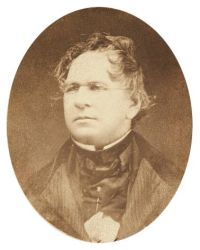
Henry Rowe Schoolcraft,
Scenes and Adventures in the Semi-Alpine Region of the Ozark Mountains of Missouri and Arkansas
“ Where their frontiers will be found, a hundred years hence, the voice of history, looking to the past, may only tell; but this appears more appreciable and clear—that the perpetuation of the race as one of the elements of mankind, must depend, in the sequel, however long that sequel be postponed, on his substantial adoption of the principles of industry, letters, and Christianity. ”
George Barnett Smith,
Encyclopædia Britannica, Ninth Edition
(1878)
“ First, there is the soul expecting death, when suddenly life is revivified by love; then the grave, which had seemed inevitable, is put behind the soul; and finally comes the sequel, the marriage of those whose history has been traced in the Sonnets. ”

Blanche Colton Williams,
How to study "The best short stories"
“ What is the sequel to the day’s success which marks Miss Willett’s continued interest in the face behind the green-slatted window? State in order the steps leading to the discovery. What is the climax of action? Does it constitute a surprise for the reader as for Miss Willett? What is the dénouement? With the dénouement, dawns the realization of what underlying theme? ”
Henry Fielding,
The History of the Life of the Late Mr…
“ When we consider the ridiculous figure this chapter must make, being the history of no less than eight years, our only comfort is, that the histories of some men's lives, and perhaps of some men who have made a noise in the world, are in reality as absolute blanks as the travels of our hero. As, therefore, we shall make sufficient amends in the sequel for this inanity, we shall hasten on to matters of true importance and immense greatness. ”
Henry James, The Figure in the Carpet
“ My words however were not absolutely the same—I put something instead of “angel”; and in the sequel my epithet seemed the more apt, for when eventually we heard from our traveller it was merely, it was thoroughly to be tantalised. He was magnificent in his triumph, he described his discovery as stupendous ”
Bernard Capes, The secret in the hill (1903)
“ And so at last was consummated that wonderful and tragic tale of mystery and fatality, which had begun for me in the old court house of Ipswich. Truly, other things than hanging and wiving go by destiny. CONCLUSION. There was a sequel, which I must relate. Stories of recovered treasure, if true like this, do not always end with the emotional unities and the final chapter. Morning does not always bring a confirmation of pious resolves. A little sourness of digestion sometimes impairs the glamour of last night’s feast of righteousness. ”
William Hazlitt, The Collected Works of William Hazlitt…
“ To give a reason for any thing is to breed a doubt of it, which doubt you may not remove in the sequel; ”
“ CHAPTER VII.—ARLINGTON AFTERWARD. CHAPTER VIII.—TO SAVE BREVET. CHAPTER IX.—JOE HAS AN’ IDEA. CHAPTER X.—BREVET SCORES A POINT. CHAPTER XI.—A RED-LETTER AFTERNOON. ONE MOMENT PLEASE. In a way, this book, “Little Homespun,” is a story quite by itself. In another way it is a sequel to “Courage,” although you can “catch its thread” without having read a line of “Courage.” Now some grown people, and I presume some children, do not care for sequels at all, but I happen to know that the children who are good enough to read and care for my stories are fond of sequels. ”
William Rounseville Alger, The Destiny of the Soul: A Critical History of the Doctrine of a Future Life
“ And if we recognize in the great catastrophic myths and previsions of the poets and scientists the fundamental truth that the things which are seen are temporal, while the things alone which are unseen are eternal, the end being a regular and remote sequel in the creative plan of God, free from anger, retributive disappointment, or cruelty will not alarm us. ”
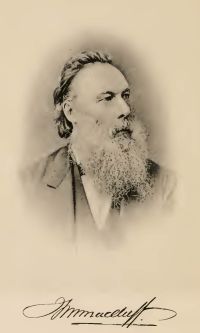
John R. Macduff,
Memories of Bethany
“ The Saviour, indeed, does not now lead us forth, amid the scene of our trial, as He did the bereft sisters, to unravel the mysteries of His providence, and to shew glory to God, redounding from the darkest of His dispensations. To us the grand sequel is reserved for eternity. The grand development of the divine plan will not be fully accomplished till then; faith must meanwhile rest satisfied with what is baffling to sight and sense. This whole narrative is designed to teach the lesson that there is an undeveloped future in all God’s dealings. ”
William Congreve,
Incognita; Or, Love and Duty Reconcil'd
“ Some I have seen begin with an unexpected accident, which has been the only surprizing part of the Story, cause enough to make the Sequel look flat, tedious and insipid; for ’tis but reasonable the Reader should expect it not to rise, at least to keep upon a level in the entertainment; for so he may be kept on in hopes that at some time or other it may mend; but the ’tother is such a balk to a Man, ’tis carrying him up stairs to show him the Dining-Room, and after forcing him to make a Meal in the Kitchin. ”
John Oliver Wardrop,
The Kingdom of Georgia: Notes of travel in a land of women…
“ From this remote date down to the present time we have an almost unbroken narrative, the trustworthiness of which is proved by its agreement with the annals of other lands. Those who are specially interested in the early history will find in the sequel such bibliographical references as will enable them to satisfy their curiosity ”
Clayton Meeker Hamilton, A Manual of the Art of Fiction
“ The reason why sequels to great novels have rarely been successful is that it has been impossible for the author in the second volume to sustain a climacteric rise of interest from the level where he left off in the first. ”
Charles Dudley Warner,
The Complete Essays of Charles Dudley Warner
“ But we come back to the general proposition that the indispensable condition of the novel is that it shall entertain. And for this purpose the world is not ashamed to own that it wants, and always will want, a story—a story that has an ending; and if not a good ending, then one that in noble tragedy lifts up our nature into a high plane of sacrifice and pathos. In proof of this we have only to refer to the masterpieces of fiction which the world cherishes and loves to recur to. ”
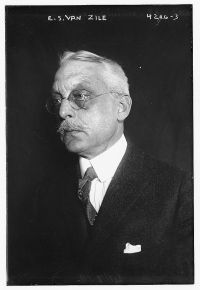
Edward S. Van Zile,
That Marvel—The Movie
“ THE MOVIE AND THE CONTINUITY WRITER Was it Brander Matthews, Henry Van Dyke, Richard Burton or Clayton Hamilton who asserted that any given novel must be placed in the category of either the Impossible, the Improbable or the Inevitable? Whoever it was, he helped to clarify the thinking of any writer who may find himself dealing with the topic of screen tales and tale-tellers, of the movie drama and the continuity writer. Every art has its own special sins of omission and commission. The poet who tells a story in verse may take liberties denied to the novelist relating the same story. ”
E. M. Forster,
Aspects of the novel
(1927)
“ It is accorded, and of necessity, by the people in a drama: how necessary is it in a novel? Let us define a plot. We have defined a story as a narrative of events arranged in their time-sequence. A plot is also a narrative of events, the emphasis falling on causality. "The king died and then the queen died," is a story. "The king died, and then the queen died of grief" is a plot. The time-sequence is preserved, but the sense of causality overshadows it. ”
H. Halliday Sparling, Völsunga Saga — Introduction
“ Something in the perfection of the saga is to be traced to the long winter’s evenings, when the whole household, gathered together at their spinning, weaving, and so on, would listen to one of their number who told anew some old story of adventure or achievement. In very truth the saga is a prose epic, and marked by every quality an epic should possess. ”
William Ambrose Spicer,
Our Day
“ The fulfilment of the word of prophecy in history is a fascinating story. To the Lord, the future is an open book, even as the present. The word is spoken, telling of the event to come; it is written on the parchment scroll by the prophet's pen. Time passes; centuries come and go. Then, when the hour of the prophecy arrives, lo, there appears the fulfilment. ”
Edward S. Van Zile,
That Marvel—The Movie
“ But, as is suggested in another chapter, the comparatively new art of the continuity writer is bound eventually to overcome its earlier handicaps and, in its bestowal upon the race of a novel medium through which creative genius can manifest itself, will beget a type of super-scenario-maker to which the screen’s future splendid achievements must be, of necessity, largely due.The meaning of life Man doesn’t know. ”
Clayton Meeker Hamilton, Materials and Methods of Fiction
“ Although, as is usually the case, we cannot, even midway through the story, foresee what the culmination is to be, we feel a certain reassurance in the knowledge that the author has foreseen it from the start. This feeling is one of the main sources of interest in reading narrative. In looking on at life itself, we are baffled by a muddle of events leading everywhither; their succession is chaotic and lacking in design; they are not marshaled and processional; and we have an uncomfortable feeling that no mind but that of God can foresee their veiled and hidden culminations. ”
Petronius Arbiter, The Satyricon — Volume 06: Editor's Notes
“ When Fate turns the leaves of the book of universal history, she enters, upon the page devoted thereto, the record of the birth of each nation in its chronological order, and under this record appears the scarlet entry to confront the future historian and arrest his unwilling attention; the only entry which time and even oblivion can never efface. ”
Charles Dudley Warner,
Quotes and Images From The Works of Charles Dudley Warner
“ Tragedy and the pathos of failure have their places in literature as well as in life. I only say that, artistically, a good ending is as proper as a bad ending. Perhaps the most inane thing ever put forth in the name of literature is the so-called domestic novel, an indigestible, culinary sort of product, that might be named the doughnut of fiction. ”
H. Halliday Sparling, Völsunga Saga — Introduction
“ Growing up while the deeds of dead heroes were fresh in memory, most often recited before the sharers in such deeds, the saga, in its pure form, never goes from what is truth to its teller. Where the saga, as this one of the Volsungs, is founded upon the debris of songs and poems, even then very old, tales of mythological heroes, of men quite removed from the personal knowledge of the narrator, yet the story is so inwound with the tradition of his race, is so much a part of his thought-life, that every actor in it has for him a real existence. ”
J. Wilbur Chapman,
And Judas Iscariot
“ He gives to us some conception of the final judgment, and the great white throne is lifted up before us; the dead, small and great, stand before God, the books are opened and those whose names are not found written in the book are cast away from his presence forever; and then as a climax of the picture we have before us the new heaven and the new earth. ”
Algernon Charles Swinburne,
Victor Hugo
“ The prologue is a superb example of the power peculiar to its author above all other poets; the power of seizing on some old symbol or image which may have been in poetic use ever since verse dawned upon the brain of man, and informing it again as with life, and transforming it anew as by fire. Among innumerable exercises and excursions of dainty but indefatigable fancy there are one or two touches of a somewhat deeper note than usual which would hardly be misplaced in the gravest and most ambitious works of imaginative genius. ”
William Cleaver Wilkinson,
Classic French Course in English
“ From the second book of his romance,—an afterthought, probably, of continuation to his unexpectedly successful first book,—we take the last paragraph of the prologue, which shows this. The veracious historian makes obtestation of the strict truth of his narrative, and imprecates all sorts of evil upon such as do not believe it absolutely. We cleanse our extract a little:—And, therefore, to make an end of this Prologue, even as I give myself to an hundred thousand panniers-full of fair devils, body and soul,... ”
Henry Albert Phillips, The photodrama (1914)
“ In the first place, we must find something to write about; some condition, experience or deed that is worthy of a plot, a story or a play. As we consider this or that item of plot material, in our search for a plot germ, we pause and ask of it: To what end? To what good? The moment we discern the culmination of a big moment, or the performance of a decisive action, or the accomplishment of a great deed, we have found our plot germ. This is not the beginning of our play, but its culmination, or climax. ”
J. C. Snaith, William Jordan, Junior (1907)
“ Or is it that during that time, my father, I have been reading over-much in the Book of the Ages?”“Ah, my beloved Achilles,” said his father, “may it not be that your existence is entering upon a new phase? You know that the mortal life of heroes has three phases. May not this be the second phase upon which you are now entering?” ”
William Hazlitt, Table-Talk (1822)
“ As to the epilogue, it is spoken to get rid of the idea of the tragedy altogether, and to ward off the fury of the pit, who may be bent on its damnation. The greatest incongruity you can hit upon is, therefore, the most proper for this purpose. But I deny that the hero of a tragedy, or the principal character in it, is ever pitched upon to deliver the prologue. It is always, by prescription, some walking shadow, some poor player, who cannot even spoil a part of any consequence. ”
Mrs. Katherine Dunlap Cather, Educating by Story-Telling
“ But if a new tale holds no suspense, it falls flat. Stevenson says: “The one rule is to be infinitely various—to interest, to disappoint, to surprise, yet still to gratify. To be ever changing, as it were, the stitch, yet still to give the effect of an ingenious neatness.” In other words, the succession of events must follow one another in a regular sequence, and each must contribute something to the one following it. ”
Robert Dodsley,
A Select Collection of Old English Plays…
“ EPILOGUE. BY MR SMITH. Our poet, gentlemen, thought to steal away, Hoping those wretched rhymes, i' th' end o' th' play, Might serve for epilogue; for truly he Takes epilogues for arrant bribery. H' observes your poet in our modern plays, Humbly showeth, and then as humbly prays; So that it can't be said, what they have writ Was without fear, though often without wit. He trusts (as ye say papists do) to merit; Leaves you (like quakers) to be mov'd by th' spirit. But since that epilogues are so much in vogue, Take this as prologue to the epilogue. ”
William Stubbs,
Seventeen lectures on the study of medieval and modern history and kindred subjects
(1886)
“ Why then should not cycles of history, two, three, or more cycles of history, be allowed to exist, within which all the really important factors have their origin and development, and, it may be, work out their full destiny; successive great dramas of ages, the interest of which is self-contained, although there is enough of common ground between them and those which precede and follow to give them a simple continuity, and although there is doubtless in the divine mind one great plan of cosmical action in which each drama of the human ages serves as a single act or even a single incident? ”
Augustin Filon, The English Stage: Being an Account of the Victorian Drama
“ The Sagas are the Commonplace Book, the livre de raison, in which this soul of the North, free from all taint of the South, and from all antique serfdom, has left its mark. For the Englishman, who reflects and ponders, it is the real Bible of his race. ”
Edward Hoare,
Rome, Turkey and Jerusalem
“ Such a question would be perfectly reasonable, but the only answer that we can give is that we do not find any such series described in the prophecy. On the other hand, everything in it looks like the end. When the seventh angel poured out his vial there came a great voice out of the temple of heaven from the throne, saying, ‘It is done!’ It certainly did not look like the commencement of another series, but taught us rather to look out for the great winding up of the whole and the final close of the great prophetic plan. ”