Warren E. Burger

Warren E. Burger

Summary

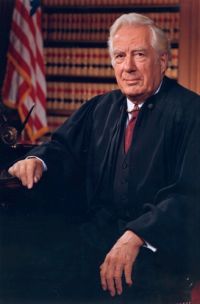
Portrait of Warren E. Burger Warren E. Burger,  O'Connor v. Donaldson (1975)

“ More important, the instructions which the Court of Appeals read as establishing an absolute constitutional right to treatment did not require the jury to make any findings regarding the specific reasons for respondent's confinement or to focus upon any rights he may have had under state law. Thus, the premise of the Court of Appeals' first theory must have been that, at least with respect to persons who are not physically dangerous, a State has no power to confine the mentally ill except for the purpose of providing them with treatment. ”
Source: Wikisource

Portrait of Warren E. Burger Warren E. Burger,  O'Connor v. Donaldson (1975)

“ However, the existence of some due process limitations on the parens patriae power does not justify the further conclusion that it may be exercised to confine a mentally ill person only if the purpose of the confinement is treatment. Despite many recent advances in medical knowledge, it remains a stubborn fact that there are many forms of mental illness which are not understood, some which are untreatable in the sense that no effective therapy has yet been discovered for them, and that rates of "cure" are generally low. See Schwitzgebel, The Right to Effective Mental Treatment, 62 Calif. ”
Source: Wikisource

Get perspective with Kwize: daily news enlightened by great literature