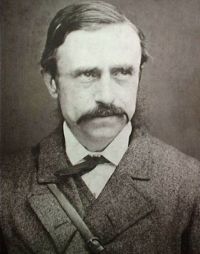
William Boyd Dawkins

William Boyd Dawkins

Summary

Portrait of William Boyd Dawkins William Boyd Dawkins,  Popular Science Monthly (1883)

“ And could we penetrate to the banks of the streams, guided by a thin column of smoke rising above the tops of the trees at Hackney or Gray's Inn, we should come upon the rude shelters of the river-drift hunters—the men selecting blocks of flint and chipping implements out of them, the women preparing the meal of flesh, and the children looking on and breaking the silence of the evening with their shouts, on those very spots where now is to be heard day and night the voice of our great city. Man is here, as before, the rival of the lion in the chase. ”
Source: Wikisource

Portrait of William Boyd Dawkins William Boyd Dawkins,  Popular Science Monthly (1883)

“ It is a magnificent trophy of the chase, buried along with the hunter in the floor of his dwelling, which proves that human art was more than a master for the claws and teeth of the most formidable beasts of prey—the lion and the cave-bear—then living in the southwest of France. The broken and burned bones on the floor point to the fact that reindeer, horses, bisons, and stags were then abundant in the neighborhood. ”
Source: Wikisource

Portrait of William Boyd Dawkins William Boyd Dawkins,  Popular Science Monthly (1883)

“ At the close of the Pleistocene age the great extension of Europe to the west sank beneath the Atlantic, and the North Sea and the English Channel flowed over the hunting-grounds of the lion, and formed "the silver streak" of which we have so much reason to be proud. A change in the wild animals accompanied, as it always does, the change in geography; some animals became extinct, such as the mammoth, while others retreated to more congenial districts, and among them the lion. ”
Source: Wikisource

Get perspective with Kwize: daily news enlightened by great literature