Summary

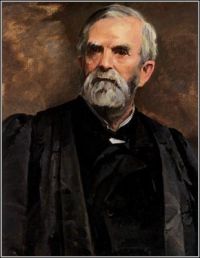
Portrait of William Burnham Woods William Burnham Woods Fulkerson v. Holmes — Opinion of the Court

The question is therefore fairly presented whether the recitals made in the deed of Samuel C. Young to John Holmes, to the effect that Samuel Young, the patentee, had died intestate, leaving one child only, namely, the said Samuel C. Young, the grantor, were admissible in evidence against the defendants, who did not claim title under the deed. The fact to be established is one of pedigree. The proof to show pedigree forms a well-settled exception to the rule which excludes hearsay evidence.
Source: Wikisource

Portrait of William Burnham Woods William Burnham Woods Fulkerson v. Holmes — Opinion of the Court

It is true the certificate of the auditor of public accounts, introduced by the defendants, states that the records of Lee county prior to 1827 are missing; but it can hardly be maintained that when a party shows his inability to prove an essential fact, the fact may be inferred from his inability to prove it. But the same certificate shows that the lands of Samuel Young were placed on the books of the commissioners of Lee county for six years, namely, from 1827 to 1832, inclusive, and that the taxes on the same lands had been paid up to and including the year 1822.
Source: Wikisource

Get perspective with Kwize: daily news enlightened by great literature