Summary

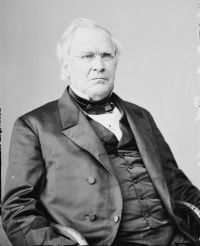
Portrait of Robert Cooper Grier Robert Cooper Grier Pillow v. Roberts — Opinion of the Court

Hence, color of title, even under a void and worthless deed, has always been received as evidence that the person in possession claims for himself, and of course, adversely to all the world. A person in possession of land, clearing, improving, and building on it, and receiving the profits to his own use, under a claim of title, is not bound to show a forcible ouster of the true owner in order to evade the presumption that his possession is not hostile or adverse to him.
Source: Wikisource

Portrait of Robert Cooper Grier Robert Cooper Grier Pillow v. Roberts — Opinion of the Court

For if you must first prove the sale to be regular and legal before the deed can be received, what becomes of the provision that the deed itself shall be evidence of these facts? Such a construction annuls this provision of the law, and renders it superfluous and useless. The evil plainly intended to be remedied by this section of the act, was the extreme difficulty and almost impossibility of proving that all the very numerous directions of the revenue act were full complied with, antecedent to the sale and conveyance by the collector.
Source: Wikisource

Portrait of Robert Cooper Grier Robert Cooper Grier Pillow v. Roberts — Opinion of the Court

The power of the legislature to make the deed of a public officer prim a facie evidence of the regularity of the previous proceedings, cannot be doubted. And the owner who neglects or refuses to pay his taxes or redeem his land has no right to complain of its injustice. If he has paid his taxes, or redeemed his land, he is, no doubt, at liberty to prove, it and thus annul the sale.
Source: Wikisource

Get perspective with Kwize: daily news enlightened by great literature