Summary

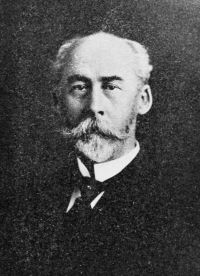
Portrait of William Henry Holmes William Henry Holmes Prehistoric Textile Art of Eastern United States

Viewing the entire textile field, we find that the range of products is extremely wide. On the one hand there is the rude interlacing of branches, vines, roots, and canes in constructing houses, weirs, cages, rafts, bridges, and the like, and on the other, the spinning of threads of almost microscopic fineness and the weaving of textures of marvelous delicacy and beauty.
Source: Gutenberg

Portrait of William Henry Holmes William Henry Holmes Prehistoric Textile Art of Eastern United States

Until within the last few years textile fabrics have hardly been recognized as having a place among the materials to be utilized in the discussion of North American archeology. Recent studies of the art of the mound-building tribes have, however, served to demonstrate their importance, and the evidence now furnished by this art can be placed alongside of that of arts in clay, stone, and metal, as a factor in determining the culture status of the prehistoric peoples and in defining their relations to the historic Indians.
Source: Gutenberg

Portrait of William Henry Holmes William Henry Holmes Prehistoric Textile Art of Eastern United States

The failure of the textile art to secure a prominent place in the field of archeologic evidence is due to the susceptibility of the products to decay. Examples of archaic work survive to us only by virtue of exceptionally favorable circumstances; it rarely happened that mound fabrics were so conditioned, as the soil in which they were buried is generally porous and moist; they were in some cases preserved through contact with objects of copper, the oxides of that metal having a tendency to arrest decay.
Source: Gutenberg

Get perspective with Kwize: daily news enlightened by great literature