Summary

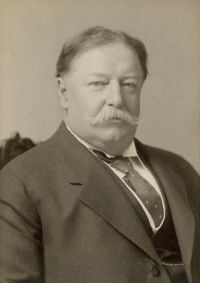
Portrait of William Howard Taft William Howard Taft United States v. Bowman — Opinion of the Court

Crimes against private individuals or their property, like assaults, murder, burglary, larceny, robbery, arson, embezzlement, and frauds of all kinds, which affect the peace and good order of the community must, of course, be committed within the territorial jurisdiction of the government where it may properly exercise it. If punishment of them is to be extended to include those committed out side of the strict territorial jurisdiction, it is natural for Congress to say so in the statute, and failure to do so will negative the purpose of Congress in this regard.
Source: Wikisource

Portrait of William Howard Taft William Howard Taft United States v. Bowman — Opinion of the Court

It would hardly be reasonable to hold that if any one, certainly if a citizen of the United States, were to steal or embezzle such property which may properly and lawfully be in the custody of army or naval officers either in foreign countries, in foreign ports or on the high seas, it would not be in such places an offense which Congress intended to punish by this section.
Source: Wikisource

Portrait of William Howard Taft William Howard Taft United States v. Bowman — Opinion of the Court

Tiis was evidently intended to protect the Emergency Fleet Corporation in which the United States was the sole stockholder, from fraud of this character. That corporation was expected to engage in, and did engage in, a most extensive ocean transportation business, and its ships were seen in every great port of the world open during the war. The same section of the statute protects the arms, ammunition, stores, and property of the army and navy from fraudulent devices of a similar character.
Source: Wikisource

Get perspective with Kwize: daily news enlightened by great literature