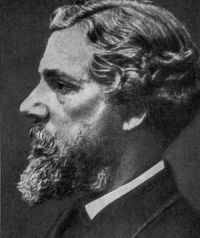
William James Herschel

William James Herschel

Summary

Portrait of William James Herschel William James Herschel The Origin of Finger-Printing

There seems, therefore, no evidence that he ever took impressions of any finger but his own. Now it is true that no one of observant habits, and least of all an engraver, could fail to perceive the peculiarities of his own finger. The brick-makers of Babylon and Egypt, and every printer since fingers were dirtied by printer's ink, must have noticed them. But it is a long step from that to a study of other men's marks, with a view to identification. What Bewick certainly did do might easily have led him to such a study, but it looks as if he was satisfied with recognizing his own mark.
Source: Gutenberg

Portrait of William James Herschel William James Herschel The Origin of Finger-Printing

On the other hand, a method of identification depending on water ink could never have survived for such strict work as our finger-prints. On the palm of the hand it can give a fairly good impression for such simple [Pg 40] identification as is wanted (say) for passports, because the large creases will obviously be those of the bearer of the passport, or as obviously not. These lines of the palm, so well known in palmistry, are as clear to a man as the shape of his hand, while those on the pads of his own fingers are scarcely noticed even now by one man in a million.
Source: Gutenberg

Portrait of William James Herschel William James Herschel The Origin of Finger-Printing

The process of registration at that time was regulated by a late law devised to afford the best security then possible for the genuineness of deeds, as far as attestation went. The signatures, whether in full or by caste mark, or by cross, or, in the case of women mostly, by touching the paper with the tip of the finger wetted with ink from the clerk's pen (see p. 35) , were always made in the presence and under the eye of the Registrar, who, in most cases, had to rely on the sworn evidence of witnesses attesting their personal knowledge of the executant.
Source: Gutenberg

Get perspective with Kwize: daily news enlightened by great literature