Summary

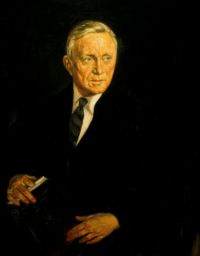
Portrait of William O. Douglas William O. Douglas Ashbacker Radio Corporation v. Federal Communications Commission…

We do not think it is enough to say that the power of the Commission to issue a license on a finding of public interest, convenience or necessity supports its grant of one of two mutually exclusive applications without a hearing of the other. For if the grant of one effectively precludes the other, the statutory right to a hearing which Congress has accorded applicants before denials of their applications becomes an empty thing.
Source: Wikisource

Portrait of William O. Douglas William O. Douglas Ashbacker Radio Corporation v. Federal Communications Commission…

There is nothing in the Communications Act that restricts the Commission in translating its duty to further the public interest as it did in the particular situation before it. In granting Fetzer's application and setting the denial of the petitioner's down for a hearing after fully canvassing the situation, the Commission brought itself within the explicit provisions of the Communications Act and applied them with that flexibility of procedure which Congress has put into the Commission's own keeping.
Source: Wikisource

Portrait of William O. Douglas William O. Douglas Ashbacker Radio Corporation v. Federal Communications Commission…

What the Commission can do to Fetzer it can do to any licensee. As the Fetzer application has been granted, petitioner, therefore, is presently in the same position as a newcomer who seeks to displace an established broadcaster. By the grant of the Fetzer application petitioner has been placed under a greater burden than if its hearing had been earlier. Legal theory is one thing. But the practicalities are different. For we are told how difficult it is for a newcomer to make the comparative showing necessary to displace an established licensee.
Source: Wikisource

Get perspective with Kwize: daily news enlightened by great literature