Summary

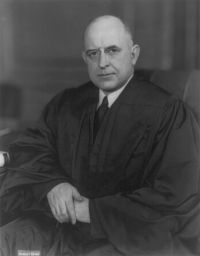
Portrait of Stanley Forman Reed Stanley Forman Reed Regents of University System of Georgia v…

No power was sought against a third party. Under the present statute, the Commission could make a choice only within the scope of its licensing power, i.e., to grant or deny the license on the basis of the situation of the applicant. It could insist that the applicant change its situation before it granted a license, but it could not act as a bankruptcy court to change that situation for the applicant. The public interest, after all, is in the effective use of the available channels, and only to that extent in what particular applicant receives a license.
Source: Wikisource

Portrait of Stanley Forman Reed Stanley Forman Reed Regents of University System of Georgia v…

Finally, we find irrelevant the fact that respondents had knowledge of the Commission proceeding denying a license unless the stock purchase contract were given 'no effect.' Even if we should assume that respondents had the right to intervene in that proceeding and to appeal from the Commission's decision, their failure to do so could not destroy their rights under the contract. It could affect them no more than to prevent them from challenging in any court the Commission's decision that a license might be denied Regents for the reasons given by the Commission.
Source: Wikisource

Portrait of Stanley Forman Reed Stanley Forman Reed Regents of University System of Georgia v…

Thus our inquiry is narrowed to the point of whether in the light of the Supremacy Clause of the Constitution, Art. 6, cl. 2, a state may enter a judgment that grants respondents a recovery on the very stock purchase contract that justified the Commission's refusal of a license. [12]
Our former decisions interpretative of the Communications Act furnish a basis for examining this question. As an administrative body, the Commission must find its powers within the compass of the authority given it by Congress.
Source: Wikisource

Get perspective with Kwize: daily news enlightened by great literature