Summary

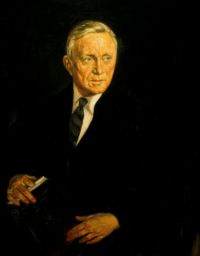
Portrait of William O. Douglas William O. Douglas Bridges v. Wixon (326 U.S. 135…

An alien who merely writes or utters a statement critical of the Government, or who subscribes to an unpopular political or social philosophy, or who affiliates with a labor union, or who distributes religious handbills on the street corner, may be subjected to the legislative whim of deportation.
I am unable to believe that the Constitution sanctions that assumption or the consequences that logically and inevitably flow from its application. The power to exclude and deport aliens is one springing out of the inherent sovereignty of the United States.
Source: Wikisource

Portrait of William O. Douglas William O. Douglas Bridges v. Wixon (326 U.S. 135…

We as a nation lose part of our greatness whenever we deport or punish those who merely exercise their freedoms in an unpopular though innocuous manner. The strength of this nation is weakened more by those who suppress the freedom of others than by those who are allowed freely to think and act as their consciences dictate.
Our concern in this case does not halt with the fate of Harry Bridges, an alien whose constitutional rights have been grossly violated.
Source: Wikisource

Portrait of William O. Douglas William O. Douglas Bridges v. Wixon (326 U.S. 135…

It would be a dismal prospect for them to discover that their freedom in the United States is dependent upon their conformity to the popular notions of the moment. But they need not make that discovery. The Bill of Rights belongs to them as well as to all citizens. It protects them as long as they reside within the boundaries of our land. It protects them in the exercise of the great individual rights necessary to a sound political and economic democracy. Neither injunction, fine, imprisonment nor deportation can be utilized to restrict or prevent the exercise of intellectual freedom.
Source: Wikisource

Get perspective with Kwize: daily news enlightened by great literature