Summary

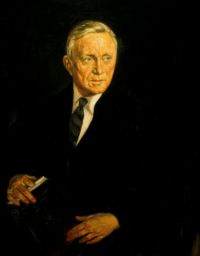
Portrait of William O. Douglas William O. Douglas Craig v. Harney — Opinion of the Court

A trial is a public event. What transpires in the court room is public property. If a transcript of the court proceedings had been published, we suppose none would claim that the judge could punish the publisher for contempt. And we can see no difference though the conduct of the attorneys, of the jury, or even of the judge himself, may have reflected on the court. Those who see and hear what transpired can report it with impunity.
Source: Wikisource

Portrait of William O. Douglas William O. Douglas Craig v. Harney — Opinion of the Court

Any inroad made upon the constitutional protection of a free press tends to undermine the freedom of all men to print and to read the truth.
In my view, the Constitution forbids a judge from summarily punishing a newspaper editor for printing an unjust attack upon him or his method of dispensing justice. The only possible exception is in the rare instance where the attack might reasonably cause a real impediment to the administration of justice. Unscrupulous and vindictive criticism of the judiciary is regrettable.
Source: Wikisource

Portrait of William O. Douglas William O. Douglas Craig v. Harney — Opinion of the Court

It cannot be repeated too often that the freedom of the press so indispensable to our democratic society presupposes an independent judiciary which will, when occasion demands, protect that freedom. To help achieve such an independent judiciary and to protect its members in their independence, the States of the Union, from the very beginning and throughout our history, have provided for prompt suppression and punishment of interference with the impartial exercise of the judicial process in an active litigation.
Source: Wikisource

Get perspective with Kwize: daily news enlightened by great literature