Summary

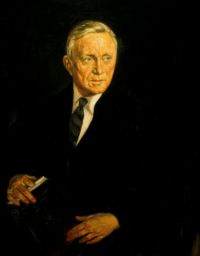
Portrait of William O. Douglas William O. Douglas Cuno Engineering Corporation v…

Certainly the use of a thermostat to break a circuit in a 'wireless' cigar lighter is analogous to or the same in character as the use of such a device in electric heaters, toasters, or irons, whatever may be the difference in detail of design. Ingenuity was required to effect the adaptation, but no more than that to be expected of a mechanic skilled in the art.
Source: Wikisource

Portrait of William O. Douglas William O. Douglas Cuno Engineering Corporation v…

The commercially exploited device because of the differences in its structure from that shown by Mead is the more compact and easily operated. Its utility as a lighter to be located on the dash of an automobile, which is said to be the merit of the Mead invention, is obvious. If the improvements resulting in such utility involved invention it is not the invention of Mead. If they exhibited only the skill of the art their success cannot be relied on to establish invention by Mead, who did not show or make them.
Source: Wikisource

Portrait of William O. Douglas William O. Douglas Cuno Engineering Corporation v…

To incorporate such a thermostatic control in a so-called 'wireless' or 'cordless' lighter was not to make an 'invention' or 'discovery' within the meaning of the patent laws. As we have shown, both the thermostatically controlled heating unit and the lighter with a removable plug bearing the heating unit were disclosed by the prior art. More must be done than to utilize the skill of the art in bringing old tools into new combinations.
Source: Wikisource

Get perspective with Kwize: daily news enlightened by great literature