Summary

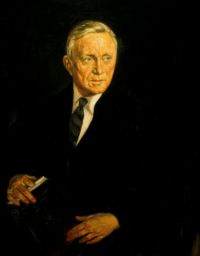
Portrait of William O. Douglas William O. Douglas Federal Housing Administration v…

Since consent to 'sue and be sued' has been given by Congress, the problem here merely involves a determination of whether or not garnishment comes within the scope of that authorization. No question as to the power of Congress to waive the governmental immunity is present. For there can be no doubt that Congress has full power to endow the Federal Housing Administration with the government's immunity from suit or to determine the extent to which it may be subjected to the judicial process.
Source: Wikisource

Portrait of William O. Douglas William O. Douglas Federal Housing Administration v…

In the absence of such showing, it must be presumed that when Congress launched a governmental agency into the commercial world and endowed it with authority to 'sue or be sued', that agency is not less amenable to judicial process than a private enterprise under like circumstances would be.
Clearly the words 'sue and be sued' in their normal connotation embrace all civil process incident to the commencement or continuance of legal proceedings. Garnishment and attachment commonly are part and parcel of the process, provided by statute, for the collection of debts.
Source: Wikisource

Portrait of William O. Douglas William O. Douglas Federal Housing Administration v…

Alexander, supra. To conclude otherwise would be to allow proceedings against the United States where it had not waived its immunity. This restriction on execution may as a practical matter deprive it of utility, since funds of petitioner appear to be deposited with the Treasurer of the United States and payments and other obligations are made through the Chief Disbursing Officer of the Treasury. [13] But that is an inherent limitation, under this statutory scheme, on the legal remedies which Congress has provided.
Source: Wikisource

Get perspective with Kwize: daily news enlightened by great literature