Summary

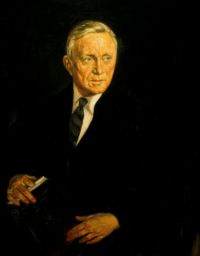
Portrait of William O. Douglas William O. Douglas Malinski v. New York — Opinion of the Court

Apart from all other considerations, how could it be otherwise without charging Madison and his great contemporaries in the framing and adoption of the Bill of Rights with writing into it a meaningless clause? The Fifth Amendment specifically prohibits prosecution of an 'infamous crime' except by indictment; it forbids double jeopardy and self-incrimination, as well as deprivation of 'life, liberty, or property, without due process of law'.
Source: Wikisource

Portrait of William O. Douglas William O. Douglas Malinski v. New York — Opinion of the Court

The safeguards of 'due process of law' and 'the equal protection of the laws' summarize the history of freedom of English-speaking peoples running back to Magna Carta and reflected in the constitutional development of our people. The history of American freedom is, in no small measure, the history of procedure.
Here we are concerned with the requirement of 'due process of law' in the enforcement of a state's criminal law. Experience has confirmed the wisdom of our predecessors in refusing to give a rigid scope to this phrase. It expresses a demand for civilized standards of law.
Source: Wikisource

Portrait of William O. Douglas William O. Douglas Malinski v. New York — Opinion of the Court

However great the proof against him otherwise may be, under our system no man should be punished pursuant to a judgment induced wholly or in part by a coerced confession. In my opinion the entire procedure, from the time Malinski was taken into custody until his written confession was obtained nearly five days later, was a single and continuous process of coercion of the type commonly known as 'the third degree.' I do not think the Constitution has room for this in company with all the protections it throws around the individual charged with crime.
Source: Wikisource

Get perspective with Kwize: daily news enlightened by great literature