Summary

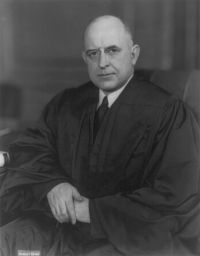
Portrait of Stanley Forman Reed Stanley Forman Reed Upshaw v. United States — Dissent

If illegal detention, per se, is believed sufficiently likely to produce a coerced confession as to justify exclusion of such confessions as evidence, it does not require this extension of the McNabb rule to make such evidence inadmissible. A court never knows whether a confession is or is not voluntary. It bars confessions on uncontroverted proof of facts which as a matter of law are deemed so coercive as to be likely to produce an involuntary confession.
Source: Wikisource

Portrait of Stanley Forman Reed Stanley Forman Reed Upshaw v. United States — Dissent

If confessions obtained during unlawful detention are not excluded by the fact of unlawful detention alone, the constitutionally guaranteed rights of the accused are nevertheless protected by the rule that no involuntary confession is admissible. It is therefore unnecessary for constitutional reasons to extend this protection to evidence obtained through violation of a statute or a rule of criminal procedure by those to whom the confession is made. In criminal trials, the method of obtaining evidence has never been a reason for barring its use except where constitutional rights were violated.
Source: Wikisource

Portrait of Stanley Forman Reed Stanley Forman Reed Upshaw v. United States — Dissent

Instead of and extension of the McNabb rule, I feel that it should be left, as I think it originally was, a rule that barred a confession extracted under psychological pressure of the degree used in the McNabb case.
Such condemnation of even the restricted McNabb rule by those immediately responsible for the enactment and administration of our criminal laws should make this Court, so far removed from the actualities of crime prevention, hesitate long before pushing farther by judicial legislation its conception of the proprieties in criminal investigation.
Source: Wikisource

Get perspective with Kwize: daily news enlightened by great literature