Summary

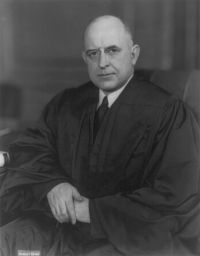
Portrait of Stanley Forman Reed Stanley Forman Reed United States v. Carignan — Opinion of the Court

Such a just and merciful rule preserves the rights of accused and society alike. It does not sacrifice justice to sentimentality. An extension of a mechanical rule based on the time of a confession would not be a helpful addition to the rules of criminal evidence. We decline to extend the McNabb fixed rule of exclusion to statements to police or wardens concerning other crimes while prisoners are legally in detention on criminal charges.
Source: Wikisource

Portrait of Stanley Forman Reed Stanley Forman Reed United States v. Carignan — Opinion of the Court

There are time-honored police methods for obtaining confessions from an accused. One is detention without arraignment, the problem we dealt with in McNabb v. United States, 318 U.S. 332, 63 S.Ct. 608, 87 L.Ed. 819. Then the accused is under the exclusive control of the police, subject to their mercy, and beyond the reach of counsel or of friends. What happens behind doors that are opened and closed at the sole discretion of the police is a black chapter in every country-the free as well as the despotic, the modern as well as the ancient.
Source: Wikisource

Get perspective with Kwize: daily news enlightened by great literature